Choosing Dog Food for Your Poodle
Toy, Miniature and Standard Poodles have different needs. We compare what is printed on the label, from AAFCO statements to calories, so you can read the bag with confidence.
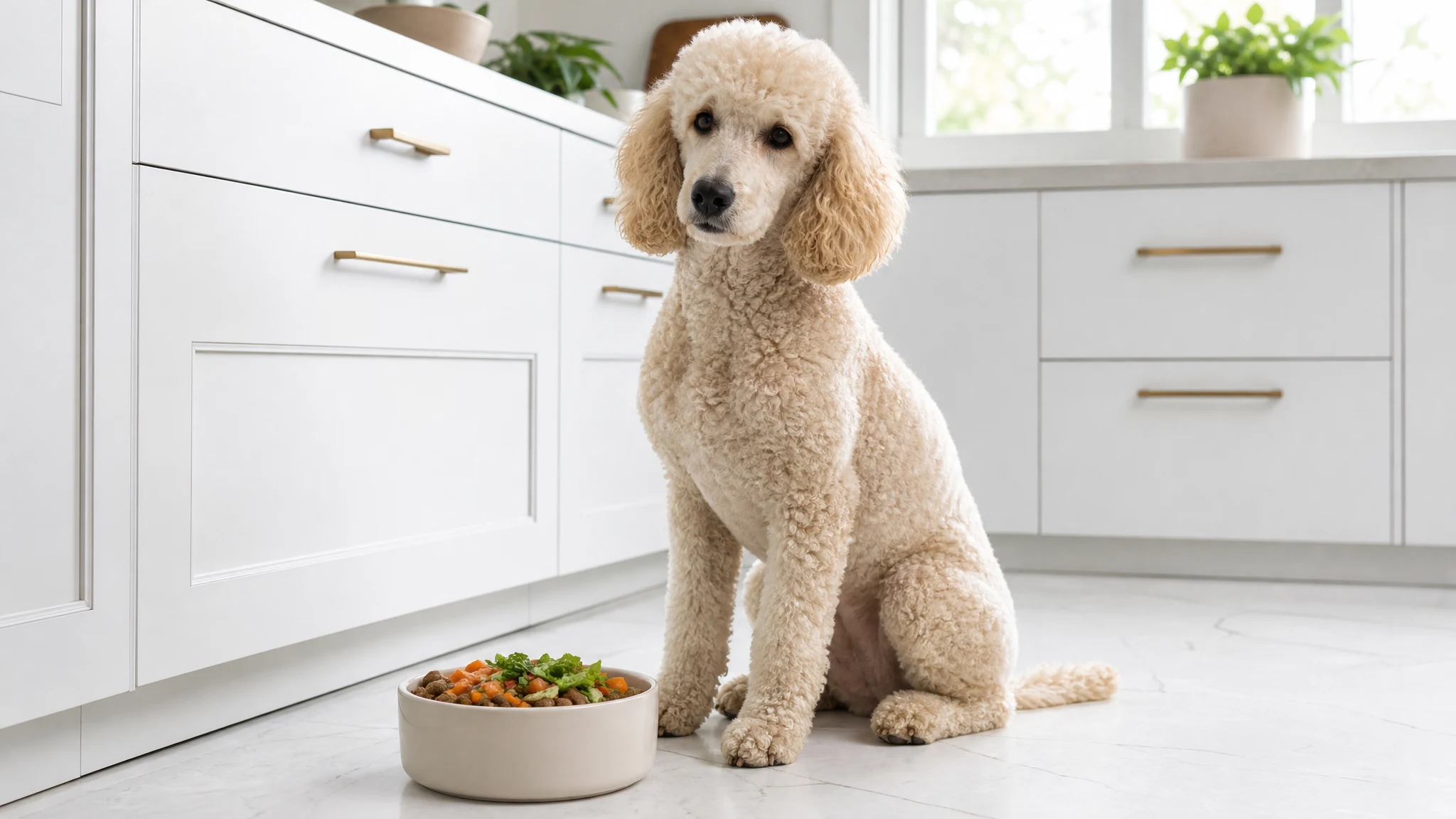
Foods for Poodles, compared by label
Protein and fat as each brand publishes them: guaranteed minimums from the label (as fed), or the dry-matter averages some brands publish instead, marked as such. We compare labels; we do not run feeding trials. Your veterinarian should choose the food for a dog with a health condition.
| Food | Form | Life stage | Protein / fat | Calories |
|---|---|---|---|---|
| Royal Canin Poodle Adult Dry Dog Food | dry | adult (10 months and older) | 28.0% / 17.0% | 353 kcal ME per cup (as fed, calculated) |
| Royal Canin Poodle Puppy Dry Dog Food | dry | puppy (growth) | 31.0% / 17.0% | 385 kcal ME per cup (as fed, calculated) |
| Royal Canin Poodle Adult Loaf in Sauce Canned Dog Food | wet | adult | 7.5% / 4.3% | per can: 81 kcal ME/can (948 kcal ME/kg), as fed, calculated |
| Hill's Science Diet Adult Small & Mini Chicken & Brown Rice Recipe Dog Food | dry | adult (maintenance) | not published | 357 kcal/cup (3699 kcal/kg) |
| Hill's Science Diet Puppy Small & Mini Chicken & Brown Rice Recipe | dry | puppy (growth) | not published | 418 kcal/cup |
| Hill's Science Diet Adult Perfect Digestion Small & Mini Chicken & Brown Rice Recipe Dog Food | dry | adult (maintenance) | not published | 347 kcal/cup |
| Hill's Science Diet Adult Small & Mini Chicken & Barley Entree and Beef & Barley Entree Wet Dog Food Variety Pack (Beef & Barley page) | wet | adult (maintenance) | not published | per can: Chicken & Barley 163 kcal/can; Beef & Barley 165 kcal/can |
| VICTOR Hi-Pro Plus Small Breed Adult | dry | adult (page AAFCO statement: all life stages) | 30.0% / 14.0% | 360 kcal/cup |
| VICTOR Hi-Pro Plus Small & Medium Breed Puppy | dry | puppy (page AAFCO statement: all life stages) | 30.0% / 18.0% | 383 kcal/cup (3730 kcal/kg) |
| Freshpet Small Dog Bite Size Chicken Recipe | fresh | all life stages | 16% / 12% | 267 kcal/cup (1,946 kcal/kg, calculated) |
| Freshpet Small Dog Chicken & Turkey Recipe with Cranberries & Spinach (1 lb roll) | fresh | adult maintenance | 9.5% / 7.5% | per lb: 317 kcal/lb (1399 kcal/kg, calculated); per cup not stated |
| Freshpet Vital Small Breed Chicken & Turkey Recipe with Cranberries & Blueberries (roll) | fresh | all life stages | 10% / 8.5% | per 1/2 lb: 354 kcal (1,562 kcal/kg ME, calculated); per cup not stated |
| Nom Nom Chicken Cuisine | fresh | all life stages | 6.5% / 4.5% | 244 kcal per cup (calculated) |
What matters when feeding Poodles
Breed facts that change what and how much to feed, with sources.
| Adult weight | Overall breed range 4-70 lbs across all three varieties. The guide gives no separate range per variety. AKC pages (Standard 40-70 lb, Miniature 10-15 lb, Toy 4-6 lb) returned 403 from this box and were not opened. PCA and the AKC standard define the varieties by height, not weight. source |
| Size | Varies by variety. Heights from the breed standard: Toy 10 in or under, Miniature over 10 and up to 15 in, Standard over 15 in. Mapping to the site's size classes (toy / small / medium) is the builder's inference, not stated by a source. Diet notes should be written per variety. source |
| Life expectancy | 10-18 years across the breed. Standard Poodles can live 12 years or more. source |
| Diet-related health topics | GDV is far more common in large, deep-chested dogs, and Cornell lists Standard Poodles among the breeds. Cornell says prophylactic gastropexy reduces twisting risk but does not prevent bloating. Feeding-management advice was not captured from the page. | The PCA lists GDV among other health concerns in the breed. |… source |
Poodle Food Guides
Start with the guide that matches your dog's variety, age and the kind of food you are considering.
Best foods
Foods compared by label data: AAFCO statement, protein, fat and calories.
Feeding
How much and how often to feed, by age and weight.
Nutrition and health
The diet questions that matter for this breed.
How we compare foods
We read each food's published label: the AAFCO nutritional adequacy statement, the guaranteed analysis, the calorie statement and the ingredient list, from the brand's own page. We note which life stage each food is formulated for and whether it covers large-breed growth. We do not test foods on dogs, accept payment from brands or earn commission on these foods. More on our method.
Poodle Food Questions, Answered
How did you compare these foods?
We compared label data published on each brand's own product page, including AAFCO statements, first ingredients, guaranteed analysis and calories. We did not run feeding trials or taste tests. Label data is a starting point for your shortlist, not proof that a food suits your individual dog.
Do Toy, Miniature and Standard Poodles eat the same food?
Not necessarily. The Poodle Club of America defines the varieties by height: Toy at 10 inches or under, Miniature over 10 and up to 15, Standard over 15. Brands label some foods for small or mini dogs, so check each brand's page for the weight range it covers, and ask your veterinarian.
Do I need a Poodle-specific formula?
Royal Canin's USA product page lists a Poodle Adult dry food with a 28 percent protein minimum and 17 percent fat minimum. Other brands sell small-breed foods instead. A breed name on the bag does not show a food is better for every Poodle, so compare the label details and ask the brand about kibble size.
Are Standard Poodles at risk of bloat?
Cornell's Riney Canine Health Center says bloat, or GDV, is far more common in large, deep-chested dogs and lists Standard Poodles among them. It says gastropexy reduces twisting risk but does not prevent bloating. No food is promised to prevent it, so ask your veterinarian about feeding routines.
What does the AAFCO statement on the bag tell me?
It says whether a food is formulated for maintenance, growth or all life stages. Freshpet's small dog recipe, for example, adds an exception for growth of large-size dogs, 70 pounds or more as adults. That is worth noticing with a Standard puppy, so ask the brand or your veterinarian.
General nutrition information compiled from product labels and published sources, not veterinary advice. Your veterinarian is the right person to choose a diet for your dog, especially one with a health condition.