Poodle Puppy Food: How Much and How Often
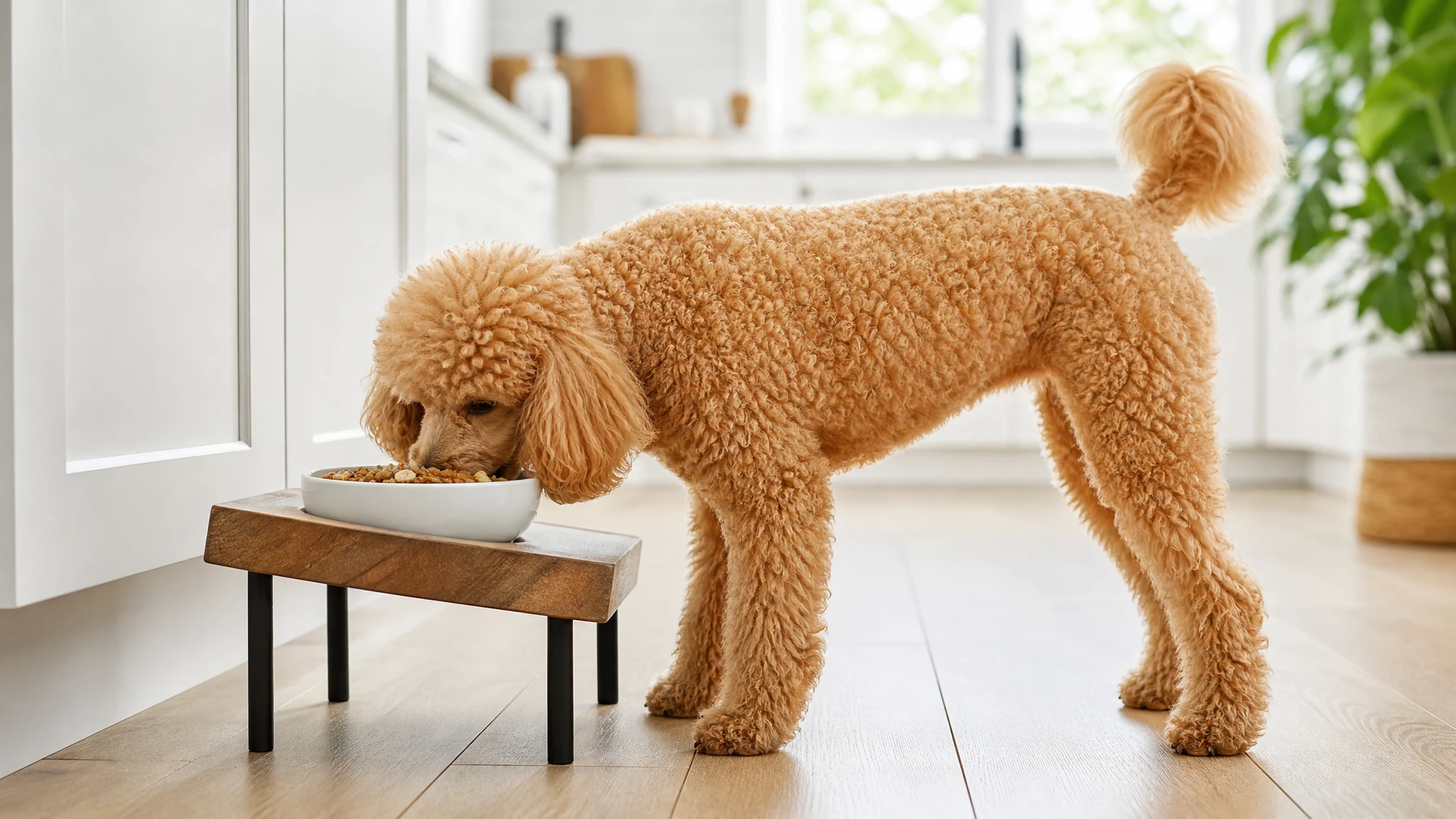
General nutrition information compiled from product labels and published sources, not veterinary advice. Your veterinarian is the right person to choose a diet for your dog, especially one with a health condition.
Poodle puppy food comes with a feeding chart on the bag, and that chart is only a starting point. A Toy Poodle puppy and a Standard Poodle puppy grow at very different scales, so the same cup measure can mean very different things for each.
This guide walks through a simple routine: read the label, find a starting amount, split it into meals, then adjust by watching your puppy. We compared label data from brand pages. We did not run feeding trials or taste tests, and nothing here replaces your veterinarian's advice for your own dog.
What You Need Before You Start
- The food's bag or brand page. You need the AAFCO statement, the calorie figure (kcal per cup) and the feeding table.
- A measuring cup or kitchen scale. Scooping by eye drifts over time.
- A bathroom or pet scale. You need a current weight for your puppy.
- A notebook or phone note. Record weight, amounts fed and how your puppy looks.
- A feeding bowl and a quiet spot. A calm routine makes meals easier to track.
- Your veterinarian's contact details. Your vet decides what is right for your individual puppy.
Step 1: Know Which Poodle Variety You Have
The Poodle Club of America describes three varieties by height: Toy is 10 inches or under, Miniature is over 10 and up to 15 inches, and Standard is over 15 inches. Diet notes work better per variety than for the breed as a whole.
Toy and Miniature puppies are small dogs. A Standard puppy is a larger dog, and Cornell's Riney Canine Health Center lists Standard Poodles among the breeds at risk of bloat (gastric dilatation-volvulus, or GDV). Cornell says GDV is far more common in large, deep-chested dogs. If you have a Standard puppy, ask your vet how to set up meals.
Step 2: Choose a Food Made for Growth
Look for the AAFCO nutritional adequacy statement on the label. For poodle puppy food, you want wording for growth or for all life stages. A statement for adult maintenance only is not meant for a growing puppy.
There is one more phrase to check. Whole Dog Journal explains that growth and all-life-stages foods carry either a statement that they include growth of large-size dogs (70 pounds or more as an adult), or an "except for growth of large-size dogs" statement. Some small-dog recipes carry the "except" wording. If you have a Standard puppy, check which statement your food has and ask your vet whether it suits your puppy.
Here is how some labels read on the brands' own pages:
| Food | Label statement | Calories |
|---|---|---|
| Royal Canin Poodle Puppy (dry) | Meets AAFCO profiles for growth | 385 kcal ME per cup, as fed, calculated |
| Hill's Science Diet Puppy Small & Mini Chicken & Brown Rice (dry) | Feeding tests using AAFCO procedures substantiate complete and balanced nutrition for growing puppies | 418 kcal per cup |
| VICTOR Hi-Pro Plus Small & Medium Breed Puppy (dry) | Meets AAFCO profiles for all life stages | 383 kcal per cup |
| Freshpet Small Dog Bite Size Chicken Recipe (fresh) | All life stages, except growth of large-size dogs (70 lbs or more as adults) | 267 kcal per cup, calculated |
Calories per cup differ by almost 40 percent from the lowest to the highest in this table (267 versus 418). So a cup of one food is not a cup of another. Never copy a cup amount from one brand to another.
The Royal Canin Poodle Puppy page, the Hill's puppy page and the VICTOR page do not state a kibble size in the information we reviewed. If kibble size matters for a Toy puppy, check with the brand.
Step 3: Find the Label's Starting Amount
Each brand sets its own feeding guide, so use the one for the food you bought. Here is what the brand pages say:
- Royal Canin Poodle Puppy: a table headed "Daily Feeding Recommendations," organized by weight and activity level. The page also offers a feeding calculator.
- Hill's Science Diet Puppy Small & Mini: adjust feeding amounts as necessary to maintain optimal weight, and ask your veterinarian if you are unsure.
- VICTOR Hi-Pro Plus Small & Medium Breed Puppy: feed as much as the puppy will eat in 20 minutes, in 4 feeding intervals spaced through the day.
- Freshpet Small Dog Bite Size Chicken Recipe: for dogs of 5-10 lbs, 1/2 to 1 cup per day, as one meal or split into two. That is the brand's guide for that weight range, not a puppy-specific rule.
Find your puppy's current weight on the brand's table, then read across to the daily amount. Treat it as the amount for the whole day, not per meal. For a fuller look at weight and age, see our Poodle feeding chart by age and weight.
Step 4: Split the Daily Amount Into Meals
How often to feed depends on the brand's guide and on your vet's advice for your puppy's age. The VICTOR puppy page describes four feeding intervals spaced through the day. Freshpet's guide for small dogs says one meal or two. Those are different brands with different foods, so they do not agree, and that is normal.
We did not find a source that gives a Poodle-specific meal count by month of age, so ask your vet what schedule fits your puppy's age. A practical way to start:
- Take the total daily amount from the label.
- Divide it by the number of meals your vet or the brand suggests.
- Measure each portion and keep to the same times each day.
- Pick up the bowl after the meal window ends so you can see how much was eaten.
If you have a Standard puppy, ask your vet specifically about meal size and spacing. Cornell notes that a preventive gastropexy surgery lowers the risk of twisting but does not stop bloating. So it is worth a direct conversation, and not something to guess at.
Step 5: Count Treats and Extras
Training treats, chews and table scraps all add calories. If your puppy is getting many treats during training sessions, take a little out of the meal portion so the day's total stays near the label amount. Use small, soft treats and keep a count in your notebook.
Step 6: Weigh, Look and Adjust
The label is a starting point. Hill's says to adjust amounts to maintain optimal weight, and VICTOR says to use its chart as a guide. Both point you to your own puppy.
- Weigh your puppy on a regular schedule, such as once a week, at the same time of day.
- Check body shape. From above you should see a waist. When you run your hands along the sides, the ribs should be easy to feel without being sharp.
- Look at energy and stools. A bright, active puppy with steady stools is a good sign. Loose stools or low energy are reasons to call your vet.
- Change amounts slowly. Make small changes, then check again after a week or so.
- Bring your notes to every vet visit. Your vet can read the weight trend better than a single number.
Step 7: Plan the Move to Adult Food
Royal Canin labels its Poodle Adult formula for dogs 10 months and older. That is one brand's label, not a rule for all Poodles. We did not find a breed source that states when a Poodle counts as an adult, and larger Standards may reach it on a different timeline from Toys. Ask your vet when to change.
When you do switch, mix the new food into the old over several days so your puppy's stomach has time to adjust. Your vet or the new brand can suggest a schedule.
Tips for Success
- Use the same measuring cup every time.
- Check the calorie line on any new food before you copy an old amount.
- Keep fresh water available.
- Feed in a calm place away from other pets.
- Read the first five ingredients, but do not judge a food by that list alone. The AAFCO statement and calories tell you more about fit.
- Be careful with marketing words like "premium" or "natural." They are not a measure of nutrition.
Common Mistakes to Avoid
- Feeding an adult-maintenance food to a puppy. Check that the statement covers growth or all life stages.
- Ignoring the large-size growth wording for a Standard puppy. Ask your vet before choosing a food with the "except growth of large-size dogs" statement.
- Treating the cup guide as fixed. It is a starting point, and your puppy's body condition matters more.
- Free-feeding without tracking. It is hard to notice appetite changes if the bowl is always full.
- Adding supplements on your own. Ask your vet first. We do not give supplement amounts here.
- Switching foods too fast. Sudden changes can upset a puppy's stomach.
- Using the food to treat a health problem. No food on this page prevents or treats any disease. Prescription diets come only from a veterinarian.
What to Expect
If the food suits your puppy and the portions are close, you may see steady weight gain, a visible waist, steady energy and regular stools. Results vary by puppy, and these signs are not a promise. If something looks off, check with your vet rather than changing the food several times in a row.
On diet and health, the Poodle Club of America lists conditions it recognizes in the breed, including hip dysplasia testing for Standards, sebaceous adenitis and Addison's disease. The PCA pages we reviewed do not tie these to a specific food. A puppy with any health condition should have amounts confirmed by a vet.
On heart health, the FDA's investigation into a possible link between certain diets and canine dilated cardiomyopathy (DCM) had its last public update on December 23, 2022. The FDA said it did not plan more public updates until there is meaningful new scientific information. Check fda.gov for anything newer, and talk with your vet if you have questions about your puppy's diet.
Quick Recap
- Identify your puppy's variety: Toy, Miniature or Standard.
- Pick a food with a growth or all-life-stages statement, and check the large-size wording.
- Use the brand's feeding guide for a starting daily amount.
- Split that amount into meals as your vet or the brand suggests.
- Count treats toward the daily total.
- Weigh, look and adjust slowly.
- Ask your vet when to move to adult food.
Sources
- Poodle Club of America, Sizes of Poodles
- Poodle Club of America, Health
- Cornell Riney Canine Health Center, GDV or Bloat
- FDA CVM, Investigation into Potential Link between Certain Diets and Canine Dilated Cardiomyopathy
- Whole Dog Journal, In the Fine Print: Nutritional Adequacy Statements
- Royal Canin, Poodle Puppy
- Royal Canin, Poodle Adult
- Hill's Pet Nutrition, Science Diet Puppy Small & Mini
- VICTOR, Hi-Pro Plus Small & Medium Breed Puppy
- Freshpet, Small Dog Bite Size Chicken Recipe