Human Foods Poodles Should Never Eat
General nutrition information compiled from product labels and published sources, not veterinary advice. Your veterinarian is the right person to choose a diet for your dog, especially one with a health condition.
Many people ask what Poodles cannot eat, and the honest answer starts with a short list of human foods that appear on the ASPCA Animal Poison Control list of foods that are unsafe for dogs. Toy, Miniature and Standard Poodles all share the same basic canine biology, so the list applies to every variety. This page groups the common questions by theme. It does not give doses, because a veterinarian or poison control decides what is safe for an individual dog.
Chocolate, Caffeine and Sweeteners
Can Poodles eat chocolate?
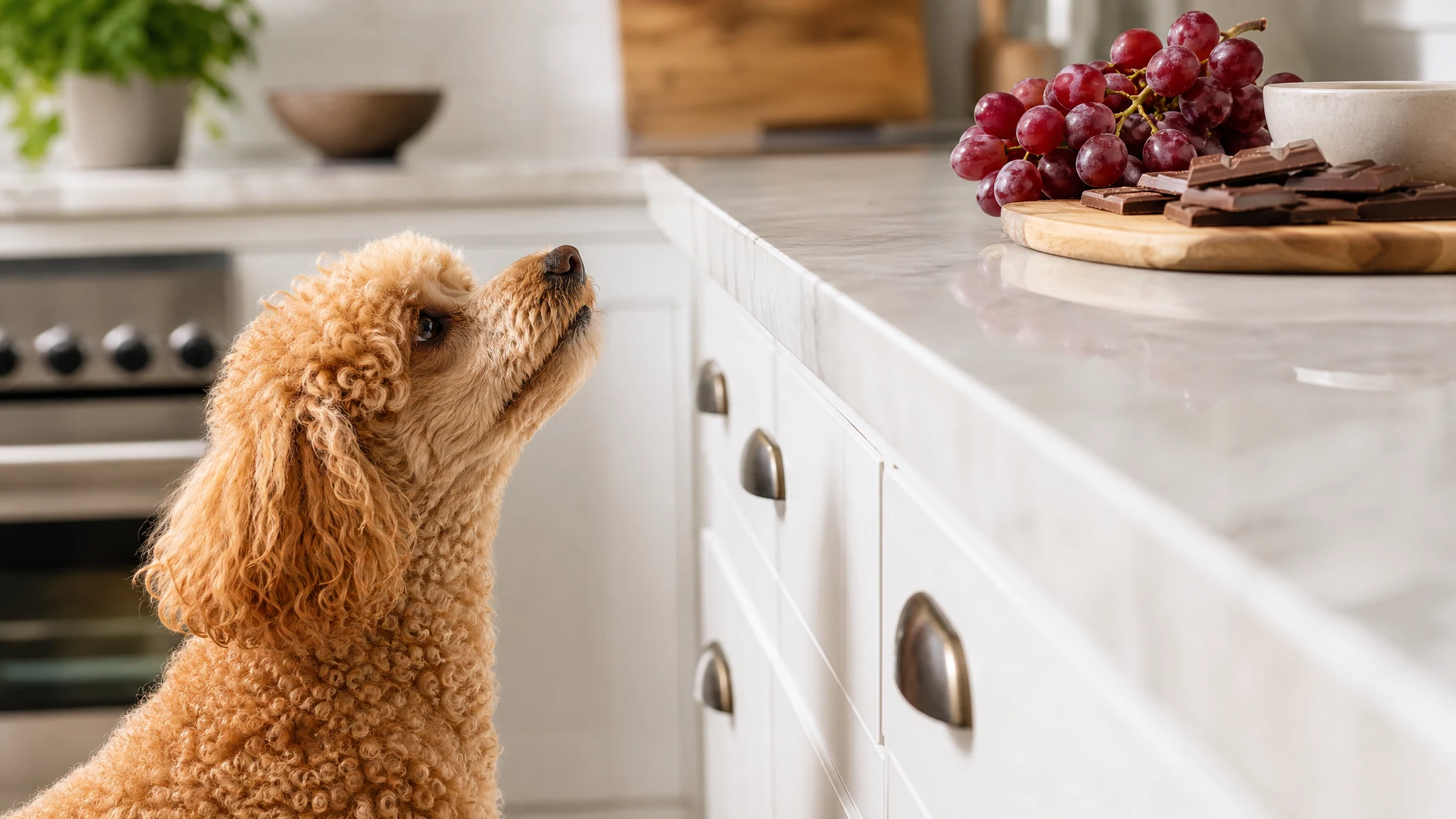
No. The ASPCA Animal Poison Control list names chocolate as a food dogs should not have. Dark chocolate and baking chocolate are generally considered the more worrying kinds, but no chocolate is a safe treat.
Why is chocolate a problem for dogs?
Chocolate contains compounds called methylxanthines, which dogs process poorly. The effect depends on the type of chocolate and the size of the dog. A Toy Poodle has far less margin than a Standard, so call for advice instead of guessing.
What is xylitol and why does it matter?
Xylitol is a sugar substitute that the ASPCA lists as dangerous for dogs. It turns up in some sugar-free gum, candy, baked goods and even some nut butters. Check the ingredient list on anything you share with your Poodle.
Is coffee or tea safe for a Poodle?
No. Caffeine is on the ASPCA list of things to keep away from dogs. That includes coffee grounds, tea bags and some energy products, which a curious Poodle can reach on a low table.
Fruits, Nuts and Vegetables
Can Poodles eat grapes or raisins?
No. The ASPCA lists grapes and raisins as toxic to dogs. Researchers have not pinned down exactly why, so there is no amount that is known to be safe. Watch for raisins hidden in cereal, trail mix and baked goods.
Can Poodles eat onions or garlic?
No. Onions and garlic, along with chives and leeks, are on the ASPCA list. This includes cooked, raw and powdered forms, so leftovers seasoned with onion or garlic powder are not a safe share.
Can Poodles eat macadamia nuts?
No. The ASPCA names macadamia nuts as unsafe for dogs. Cookies and snack mixes that contain them count too.
Is avocado safe for dogs?
The ASPCA lists avocado among foods to avoid. The pit is also a choking and blockage hazard, which matters most for small dogs such as Toy Poodles.
What about fruit pits and seeds?
Pits from peaches, plums and similar fruit can cause choking or an intestinal blockage, and some contain harmful compounds. Remove them completely, or skip the fruit. Ask your veterinarian before offering any fruit regularly.
Is raw bread dough dangerous?
Yes. The ASPCA warns against yeast dough, which can expand in the stomach and also produces alcohol as it ferments. Keep rising dough well out of reach, including on counters.
Drinks, Fat and Seasoning
Can Poodles have alcohol?
No. Alcohol is on the ASPCA list, and that includes beer, wine, spirits and foods made with them. Spilled drinks and unattended cups at a party are the usual ways dogs get into trouble.
Are fatty table scraps okay?
It is best to skip them. Rich, fatty leftovers such as bacon, gravy and trimmed fat are listed by the ASPCA as a concern for dogs. They can upset the stomach, and a veterinarian can explain the risks for your dog.
Are cooked bones a good chew?
No. Cooked bones can splinter and injure the mouth or gut, and they can cause blockages. Ask your veterinarian which chews suit your Poodle's size and teeth.
Is salty or seasoned food a problem?
It can be. Heavily salted snacks and seasoned dishes often contain onion, garlic or other ingredients dogs should not have. Plain is the safer rule for anything you share.
Poodle Size and Feeding Habits
Does the variety of Poodle change the risk?
Yes, for size. The Poodle Club of America describes Toy Poodles as 10 inches or under, Miniatures as over 10 and up to 15 inches, and Standards as over 15 inches. A small dog reacts to a smaller amount of a toxic food, so a Toy Poodle needs the quickest call for help.
Should I worry about bloat when sharing food with a Standard Poodle?
Cornell's Riney Canine Health Center lists Standard Poodles among the breeds affected by gastric dilatation-volvulus (GDV), or bloat. I cannot tell you that any snack prevents or causes it. Ask your veterinarian about feeding routines for a deep-chested dog.
Safer Snacks
Can Poodles eat carrots?
Plain carrots are a common low-calorie choice that many veterinarians suggest for dogs. Cut them into pieces that suit your Poodle's size to reduce choking risk. Ask your veterinarian before adding any new food.
Can Poodles eat blueberries or plain cooked chicken?
Both are widely used as occasional treats when served plain, with no seasoning, oil or onion. Keep the portions small so snacks do not crowd out the main diet. Your veterinarian can tell you what fits your dog.
Is peanut butter okay?
Only if the label shows no xylitol. Read the full ingredient list every time, since recipes change. When in doubt, choose a different treat.
Where do I start with a complete diet?
Treats should be a small part of the day, with a complete and balanced food doing the real work. Our label-by-label comparison of dog foods for Poodles looks at label data only, not feeding trials or taste tests.
If Your Poodle Eats Something Unsafe
What should I do right away?
Call your veterinarian or the ASPCA Animal Poison Control Center straight away. Check the ASPCA's own website for its current phone number and any consultation fee, since this page cannot confirm them. Have the food, the packaging and your dog's approximate weight ready.
Should I make my dog vomit?
Only if a veterinarian or poison control professional tells you to. Some substances cause more harm coming back up, and a Poodle with a narrow muzzle can inhale vomit. Follow the professional's instructions for your dog.
Should I wait for symptoms?
No. Some toxic foods cause signs hours later, and by then treatment can be harder. Calling early costs little, and the professional can say whether your dog needs to be seen.