Grain-Free Food and Poodles: What the FDA DCM Investigation Found
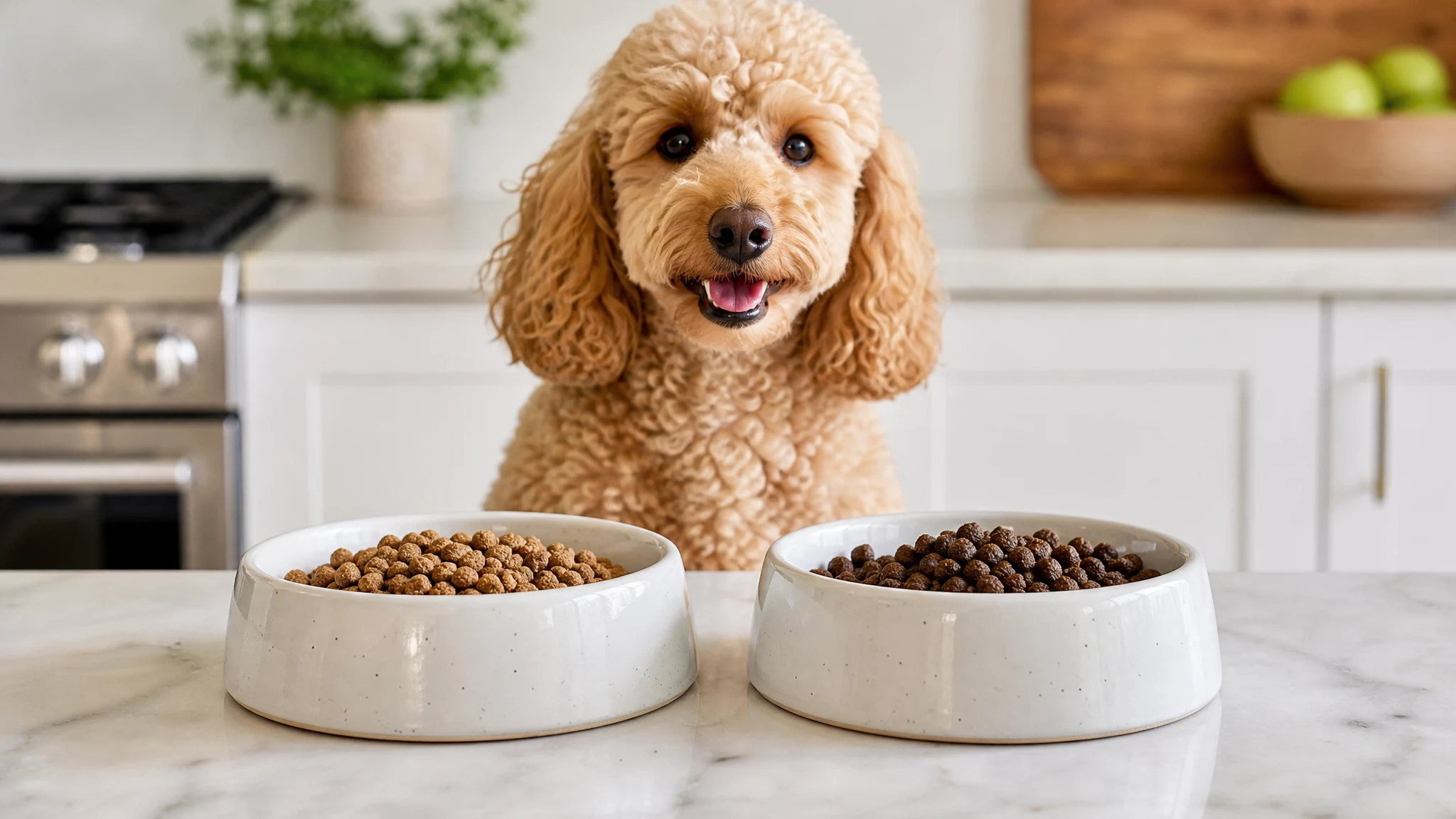
General nutrition information compiled from product labels and published sources, not veterinary advice. Your veterinarian is the right person to choose a diet for your dog, especially one with a health condition.
Grain free dog food has been in the news since the FDA began looking at a possible link between certain diets and canine dilated cardiomyopathy (DCM). If you share your home with a Standard, Miniature or Toy Poodle, you may be asking whether grain free food is bad for Poodles.
The honest answer is that the investigation did not settle the question. This guide walks you through how to read the FDA's status, check your dog's food label, and prepare for a conversation with your veterinarian. It does not tell you what to feed.
What You Need Before You Start
- The bag or can your Poodle eats now, or a photo of the full label.
- The Poodle's variety (Standard, Miniature or Toy), age and current weight.
- A note of any treats, toppers or fresh food you add.
- A pen and paper, or a phone note, for questions.
- About 20 minutes and access to the FDA page linked in the Sources list.
Step 1: Read What the FDA Actually Says
The FDA Center for Veterinary Medicine (CVM) page is titled "FDA Investigation into Potential Link between Certain Diets and Canine Dilated Cardiomyopathy." Note the wording: it describes a potential link and certain diets. It does not say grain free dog food as a whole causes heart disease.
The most recent update we found on that page is dated December 23, 2022. In it, the FDA said it does not intend to release further public updates until there is meaningful new scientific information. The page we reviewed gave that statement but no case counts.
Because the FDA can add information at any time, open the page yourself and check the date before you rely on this article. Anything newer than December 2022 would supersede what is written here.
Step 2: Separate What Is Known From What Is Not
Write two short lists. This keeps headlines from blurring the picture.
What the sources support
- The FDA CVM opened an investigation into a potential link between certain diets and DCM.
- As of its December 23, 2022 update, the FDA said it would not publish further public updates without meaningful new science.
What the sources we reviewed do not tell us
- The FDA page we opened did not give case counts, so we cannot tell you how many dogs were affected.
- It did not, in the text we reviewed, name Poodles as a breed at higher risk from grain free food.
- We did not find a confirmed cause that applies to an individual Poodle.
If a website gives you a confident number or a firm cause that the FDA page does not, treat it with caution and look for the original source.
Step 3: Check Whether Poodles Have a Stated DCM Predisposition
This is the heart of the question "is grain free bad for poodles?" Start with what the breed's own sources list.
The Poodle Club of America (PCA) health page discusses conditions such as sebaceous adenitis and hip evaluation for Standard Poodles, and it describes Addison's disease in general terms. In the sources used for this article, we did not find DCM stated as a Poodle-specific predisposition. That is not the same as proof that no Poodle can develop it.
For bloat, the Cornell Riney Canine Health Center lists Standard Poodles among the breeds with gastric dilatation-volvulus (GDV) risk. That is a separate issue from DCM, and Cornell says a preventive stomach surgery reduces twisting risk but does not prevent bloating. It is a reminder to name the variety when you talk about diet, since a Toy and a Standard are quite different dogs.
For the most current breed health information, check with the Poodle Club of America and ask your veterinarian whether DCM is a concern for your particular dog.
Step 4: Find Out Whether Your Poodle's Food Is Grain Free
Grain free is a marketing term, not a nutrition grade. Look at the ingredient list rather than the front of the bag.
- Find the ingredient list and read the first five items. Corn, wheat, rice, barley, oats, millet and sorghum are grains. Their absence is what "grain free" means.
- Check the AAFCO statement, usually near the guaranteed analysis. It should say the food is formulated to meet AAFCO Dog Food Nutrient Profiles for a life stage such as maintenance, growth or all life stages.
- Look at the calories per cup. Two foods can differ a lot, which matters for a small dog.
As an example of how labels differ, the Freshpet Small Dog Bite Size Chicken Recipe lists chicken, chicken liver, carrots, cranberries and eggs as its first five ingredients and is described by the brand as grain free, at 267 kcal per cup (calculated). Its AAFCO statement says all life stages, except growth of large-size dogs (70 lbs or more as adults). The Royal Canin Poodle Adult dry food, by contrast, lists corn first and is not grain free, at 353 kcal ME per cup (as fed, calculated). These are label facts only, and neither is a recommendation or a statement about heart health. Check each brand's own page for current details.
Step 5: Note the Life Stage and Size Wording
A Poodle puppy, an adult Miniature and a senior Standard have different needs. Check that the statement on the label matches your dog's stage.
The AAFCO large-breed wording matters for Standard Poodle puppies. According to Whole Dog Journal, growth and all life stages foods carry either a statement that they cover growth of large-size dogs (70 pounds or more as an adult) or an "except for growth of large-size dogs" statement. Whether a Standard Poodle puppy falls into that group is a question for your veterinarian, since adult weights vary by dog.
Step 6: Write Your Questions for the Veterinarian
A veterinarian decides what suits an individual dog. Bring your label photos and these questions:
- Given my Poodle's variety, age and health history, is the current food appropriate?
- Is there any reason to think DCM is a concern for this dog?
- Should we change food, and if so, how slowly?
- What is a healthy body condition for this dog, and how many calories should I aim for?
- Are the treats and toppers I add affecting the balance of the diet?
Do not change a dog's diet because of a headline alone. Do not stop a prescribed diet without asking the clinic first.
Step 7: Compare Alternatives Using Label Data
If your veterinarian suggests a change, compare foods the same way each time: AAFCO statement, first five ingredients, guaranteed analysis and calories per cup. Our label-by-label comparison of dog foods for Poodles sets these details side by side.
To be clear about method, we compared label data from the brands' own pages. We did not run feeding trials or taste tests, and we cannot say how any food performs in a given dog.
Brand pages sometimes leave gaps. For example, kibble size was not listed for several of the dry foods we looked at, so check with the brand if it matters for your Toy or Miniature.
Tips for Doing This Well
- Keep the label. Take a photo of the full panel and the lot information. Formulas change.
- Use the feeding guide as a starting point. Label amounts are a first estimate. Adjust with your veterinarian based on body condition.
- Change foods gradually. Ask your veterinarian how to transition, especially for a small dog with a sensitive stomach.
- Re-check the FDA page now and then. If the agency adds meaningful new science, it will say so there.
- Name the variety. Advice for a 5 lb Toy does not transfer to a 60 lb Standard.
Common Mistakes to Avoid
- Treating "grain free" as either a warning or a health claim. It describes ingredients, not safety or quality.
- Assuming grains are automatically better or worse. The sources we reviewed do not support either claim for Poodles.
- Using a breed label as proof. A "Poodle formula" or "small breed" name tells you about the marketing and kibble design, not about your dog's health.
- Switching suddenly. Abrupt changes can upset digestion.
- Relying on social media for medical conclusions. Ask your veterinarian instead.
- Ignoring symptoms. Unusual tiredness, coughing, fainting or trouble breathing are reasons to call a veterinarian promptly, not to adjust food at home.
What to Expect Afterward
After you finish these steps, you should have a clear view of your dog's current food, what the FDA has and has not said, and a list of questions for your clinic. You may find that your Poodle's food is not grain free at all, or you may find that it is and your veterinarian is comfortable with it.
A diet review like this may help you and your veterinarian make a more informed choice. It cannot promise any health outcome. Poodles can live many years, and the Embrace Pet Insurance breed guide gives a range of 10 to 18 years across the breed, so a steady, reviewed feeding plan is worth the effort.
The scientific picture may also change. Until the FDA reports meaningful new information, the safest approach is to stay informed, read labels carefully and keep your veterinarian involved.
Sources
- FDA CVM: FDA Investigation into Potential Link between Certain Diets and Canine Dilated Cardiomyopathy
- Poodle Club of America: Health
- Poodle Club of America: Sizes of Poodles
- Cornell Riney Canine Health Center: GDV or Bloat
- Whole Dog Journal: In the Fine Print, Nutritional Adequacy Statements
- Embrace Pet Insurance: Poodle breed guide
- Freshpet: Small Dog Bite Size Chicken Recipe
- Royal Canin USA: Poodle Adult Dry Dog Food