Best Dog Food for Miniature Poodles by Life Stage

General nutrition information compiled from product labels and published sources, not veterinary advice. Your veterinarian is the right person to choose a diet for your dog, especially one with a health condition.
Choosing the best dog food for mini poodles starts with the label, not the front of the bag. Marketing words like "premium" or "natural" have no set meaning. The AAFCO statement, the ingredient list and the calorie count tell you far more.
This guide explains what to check for a Miniature Poodle puppy, adult and senior. It then compares real foods on label data only. We compared published label information. We did not run feeding trials or taste tests, and nothing here says a food prevents or treats any condition.
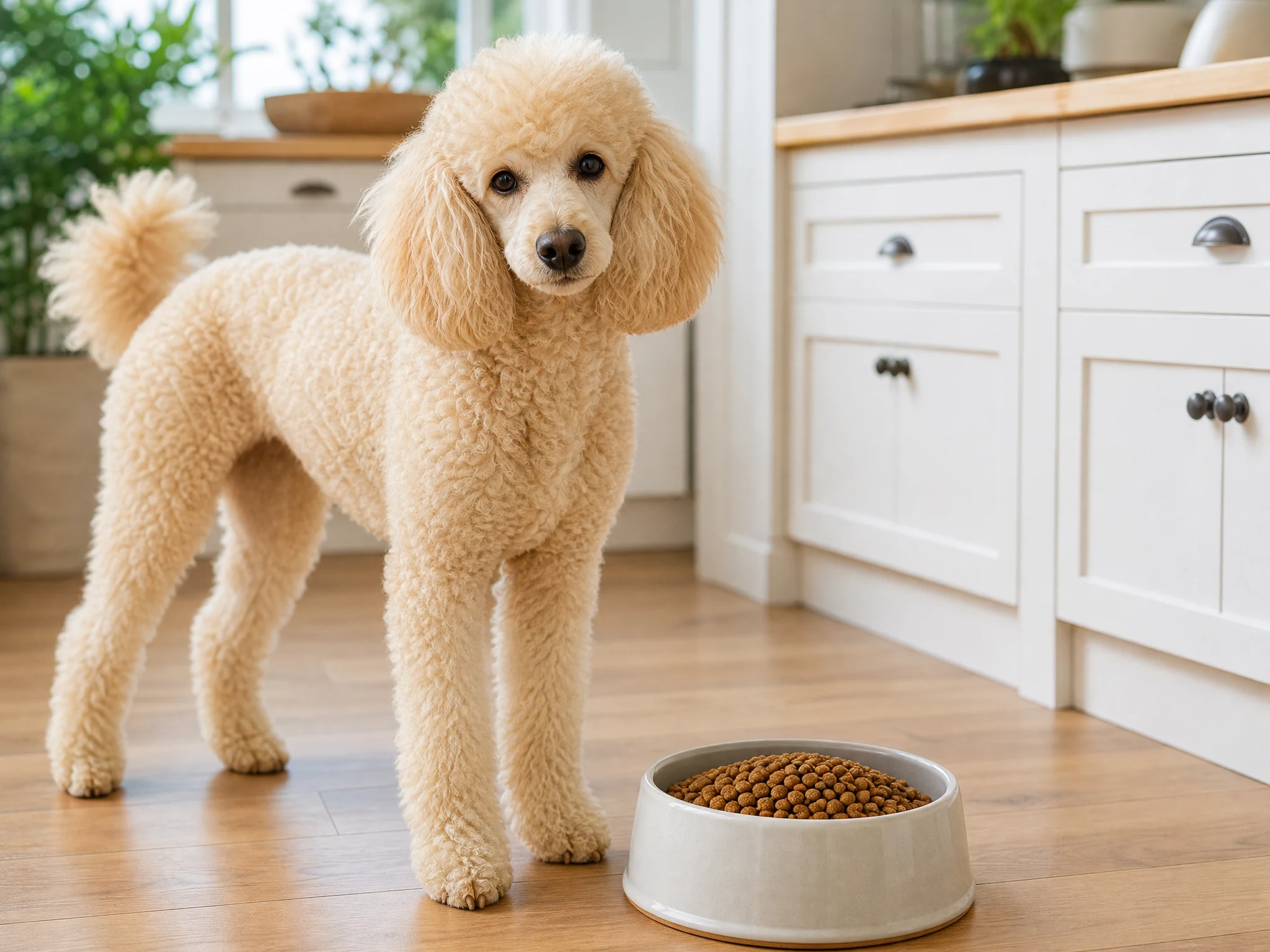
Why the Miniature variety matters
The Poodle Club of America says the Miniature Poodle is over 10 inches and up to 15 inches tall at the shoulder. The Toy is 10 inches or under, and the Standard is over 15 inches. A Miniature is a small dog, so kibble size and calorie density matter more than they would for a Standard.
Be careful with Poodle-wide advice. Some health topics, such as bloat, are raised mainly for the Standard variety. For a Miniature, ask your veterinarian what applies to your own dog.
Embrace Pet Insurance puts Poodle life expectancy at 10 to 18 years across the breed. That is a long time to feed one dog, and needs change along the way. Your dog's weight, activity and health history decide the details, and a veterinarian makes those calls.
What to look for on the label
1. A complete and balanced statement for the right life stage
Find the AAFCO nutritional adequacy statement, usually in small print near the ingredients. It should say the food is formulated to meet the AAFCO Dog Food Nutrient Profiles, or that feeding tests substantiate it. It should name a life stage: growth, maintenance, or all life stages.
Whole Dog Journal explains that growth and all-life-stages foods carry one of two statements about large-size dogs (70 pounds or more as an adult). Either they include growth of large-size dogs, or they say "except for growth of large-size dogs." A Miniature Poodle is not a large-size dog, so the "except" wording is not a problem for this variety.
2. Ingredients you can read
Ingredients are listed by weight, including water. A fresh meat can look high on the list partly because of its water content. A named meal, such as chicken meal, is a concentrated form. Neither is automatically better. Look at the whole list, not only the first item.
3. Guaranteed analysis, read carefully
The guaranteed analysis gives minimum protein and fat and maximum fiber, as fed. Some brands publish only dry matter averages, which are a different measure. Do not compare an as-fed number with a dry matter number as if they matched.
4. Calories per cup
Small dogs eat small amounts, so a difference of 50 kcal per cup adds up. Check kcal per cup or per can, then use the feeding guide as a starting point and adjust with your veterinarian.
5. Kibble size and form
Most brands in our comparison do not publish a kibble size. Where it is unknown, check with the brand. Wet and fresh foods are listed by can, roll or cup instead.
Puppy foods compared on label data
A Miniature Poodle puppy needs a food labeled for growth or all life stages. The Royal Canin and Hill's puppy foods below are labeled for growth. The VICTOR food carries an all-life-stages statement.
| Food | AAFCO statement | First ingredients | Protein / fat | Calories |
|---|---|---|---|---|
| Royal Canin Poodle Puppy (dry) | Growth | Chicken by-product meal, brewers rice, wheat gluten, chicken fat, corn | 31% min / 17% min | 385 kcal ME per cup |
| Hill's Science Diet Puppy Small & Mini Chicken & Brown Rice (dry) | Growth, feeding tests | Chicken, whole grain oats, brown rice, chicken meal, chicken fat | 28.9% / 19.7% (dry matter averages) | 418 kcal per cup |
| VICTOR Hi-Pro Plus Small & Medium Breed Puppy (dry) | All life stages | Beef, chicken, beef meal, chicken meal, whole grain sorghum | 30% min / 18% min | 383 kcal per cup |
The Royal Canin and VICTOR numbers are minimums, while the Hill's numbers are dry matter averages, so they do not line up directly. VICTOR's page says to feed as much as the puppy will eat in 20 minutes, in four feedings spaced through the day. Treat that as the brand's starting point and ask your veterinarian about your puppy's growth.
Adult foods compared on label data
Royal Canin labels its Poodle Adult formula for dogs 10 months and older. When your own dog should move to an adult food is something to settle with your veterinarian, since no breed source we reviewed sets an age.
| Food | AAFCO statement | First ingredients | Protein / fat | Calories |
|---|---|---|---|---|
| Royal Canin Poodle Adult (dry) | Maintenance | Corn, chicken by-product meal, brewers rice, wheat gluten, chicken fat | 28% min / 17% min | 353 kcal ME per cup |
| Hill's Science Diet Adult Small & Mini Chicken & Brown Rice (dry) | Maintenance, feeding tests | Chicken, brown rice, whole grain wheat, whole grain corn, brewers rice | 25% / 15.3% (dry matter averages) | 357 kcal per cup |
| Hill's Science Diet Adult Perfect Digestion Small & Mini (dry) | Maintenance | Chicken, brown rice, cracked pearled barley, brewers rice, corn protein meal | 28% / 15.7% (dry matter averages) | 347 kcal per cup |
| VICTOR Hi-Pro Plus Small Breed Adult (dry) | All life stages | Beef, chicken meal, beef meal, brown rice, whole grain millet | 30% min / 14% min | 360 kcal per cup |
On paper, the four dry foods sit within about 10 kcal per cup of each other, apart from the Perfect Digestion formula, which is a little lower. That makes portion size, not the bag, the bigger lever for weight. Royal Canin's Poodle Adult lists corn first. Some readers prefer a named meat first, and others do not mind. It is a label fact, not a verdict.
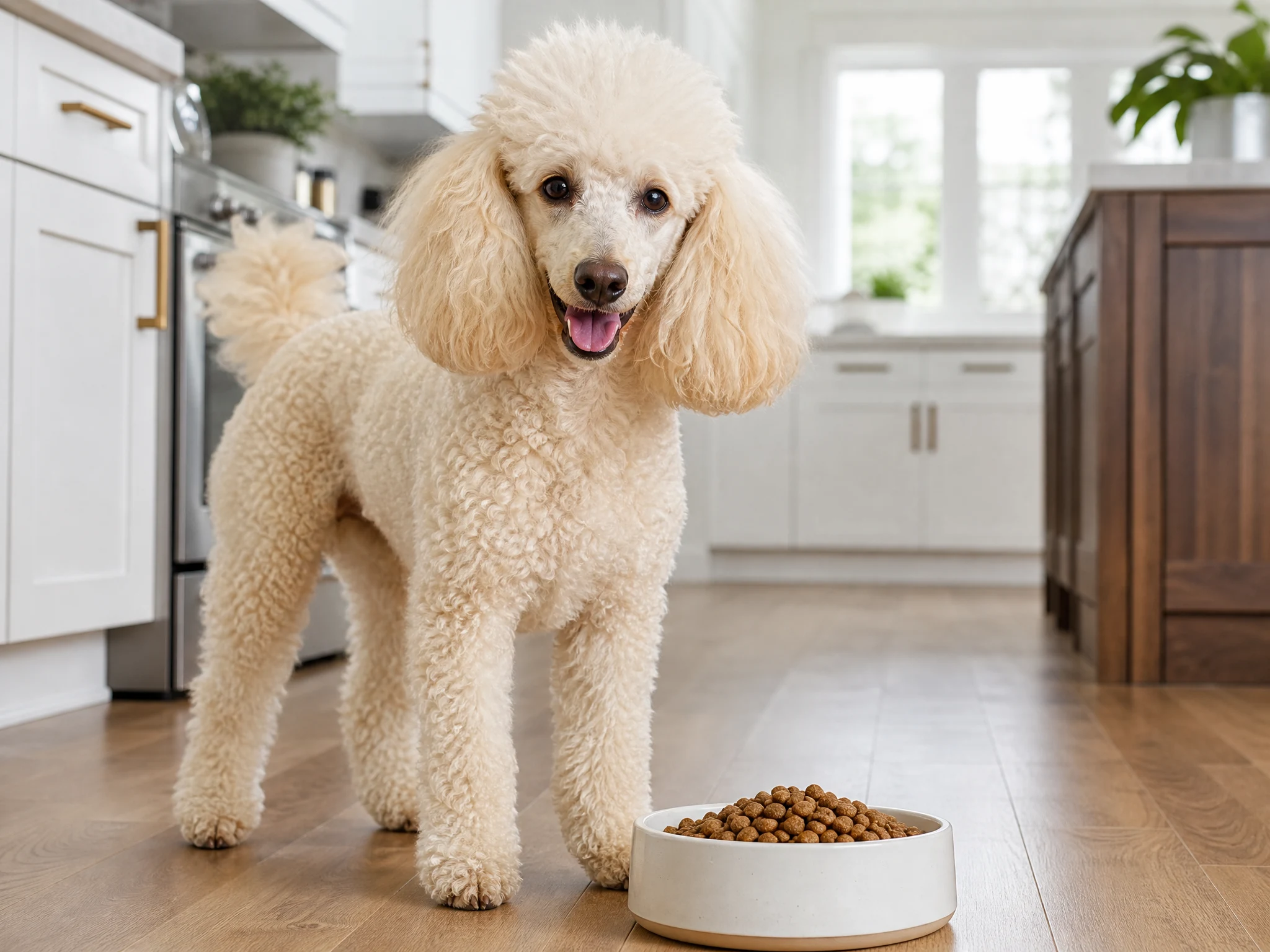
Wet and fresh options
Moisture changes everything on a label, so wet and fresh foods look low in protein and fat as fed. That does not make them weaker foods. It means you need to compare calories and statements, not percentages.
- Royal Canin Poodle Adult Loaf in Sauce (canned): maintenance statement, 81 kcal ME per can, first ingredients water, pork by-products, chicken, pork liver and chicken by-products.
- Hill's Science Diet Adult Small & Mini wet entrees: maintenance statement. The Chicken & Barley can is listed at 163 kcal and the Beef & Barley at 165 kcal.
- Freshpet Small Dog Bite Size Chicken Recipe: all life stages, except growth of large-size dogs. It lists 267 kcal per cup and is grain free. The label's guide for 5 to 10 pound dogs is 1/2 to 1 cup per day, in one meal or two.
- Freshpet Small Dog Chicken & Turkey Recipe (1 lb roll): adult maintenance, 317 kcal per pound, with 1/4 to 3/8 pound per day for dogs of 5 to 10 pounds.
- Nom Nom Chicken Cuisine: all life stages, 244 kcal per cup. It is not breed or size specific, so check the full statement with the brand.
These feeding amounts come from the labels and are only starting points. A Miniature Poodle can weigh more than 10 pounds, so use your own dog's weight on the brand's guide.
Price points and where to buy
We do not list prices. Prices change often, and no brand page we reviewed gave a stable figure we could cite. Compare cost per day instead. Take the price of a bag or case from the brand, divide by the days it lasts at your dog's feeding amount, and compare across foods. Calories per cup help here, because a denser food can need less volume.
For where to buy, start with the brand's own page: Royal Canin, Hill's Pet Nutrition, VICTOR, Freshpet and Nom Nom. Check each brand for current availability and sellers. Your veterinarian's office may also stock or recommend options.
Red flags to avoid
- No AAFCO statement, or no life stage. You cannot tell whether the food is complete and balanced.
- A growth puppy fed an adult-only food. A maintenance statement is not a growth statement.
- Disease claims. A bag that says it prevents or cures a condition is making a promise a food label should not make. Only a veterinarian prescribes diets for a medical problem.
- Vague ingredient wording. Look for named sources rather than unspecified "meat" terms.
- No calories listed. You cannot portion a small dog well without them.
- Grain-free assumed to be better. The FDA has investigated a possible link between certain diets and canine dilated cardiomyopathy. Its latest update we found, from December 2022, said it did not plan more public updates without meaningful new science. Check fda.gov for anything newer and discuss grain-free diets with your veterinarian.
How to pick for your dog
Start with life stage, then compare statement, calories and ingredients on two or three foods. Introduce any new food gradually, and keep the feeding amount steady while you watch body condition. If you want a wider side-by-side, see our label-by-label Poodle food comparison.
The best dog food for mini poodles is the one that matches your dog's life stage, keeps a healthy body condition, and suits your veterinarian's advice. A Poodle with allergies, digestive trouble or a weight problem needs a veterinarian's guidance, not a label alone.
Sources
- Poodle Club of America, Sizes of Poodles
- Embrace Pet Insurance, Poodle breed guide
- Whole Dog Journal, In the Fine Print: Nutritional Adequacy Statements
- FDA CVM, Investigation into Potential Link between Certain Diets and Canine Dilated Cardiomyopathy
- Royal Canin USA, Poodle Puppy
- Hill's Pet Nutrition, Puppy Small & Mini
- VICTOR, Hi-Pro Plus Small & Medium Breed Puppy